Published Oct. 31, 2025, 12:50 p.m.
Bungamati Heritage House: A Home for the Master Carver
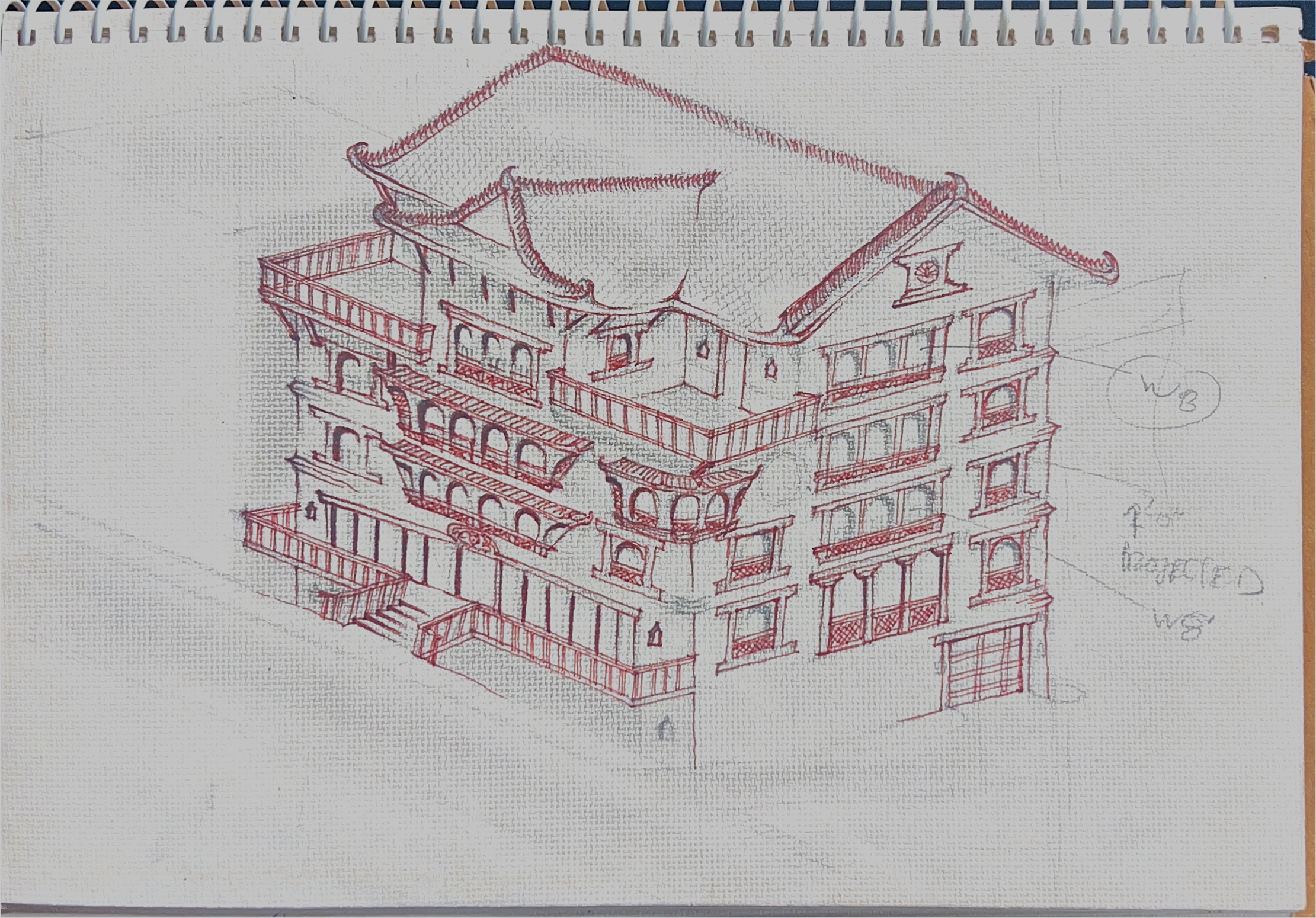
Yesterday, I was invited to a house puja in Bungamati, an
ancient Newar settlement about nineteen kilometers from my home. Bungamati,
known for its centuries-old woodcarving tradition, still resonates with the
rhythmic sound of chisels and the earthy scent of freshly carved wood.
The house belonged to Shanta, a master woodcarver and now a dear friend. We
first met around 2018, when I commissioned him to carve the windows for my own
house. Back then, he worked beneath a large tahara—a
temporary tin shed that offered little comfort against the blazing sun, the
monsoon rains, or the winter cold. Watching him create intricate designs in
such conditions, I remember feeling that someone of his skill deserved more
dignity.
“You own this land,” I told him. “You should have a space that reflects your
artistry—a place to work, exhibit your creations, and welcome friends.” It was
a casual remark, but one that lingered in both our minds.
Years later, my phone rang.
“Sonam ji,” Shanta said with quiet excitement, “I want to hire you to design my
workshop and gallery.”
From that day, I devoted myself to the project. My goal was to design not
only a house for his family and his craft but a building that itself could become
a space of exhibition. Shanta and his father are among the most renowned
carvers in the valley, so I wanted the façade to celebrate their heritage. We
selected and composed traditional window types—sa: jhya, ku: jhya,
tiki jhya, bima: jhya, and deshya moru jhya—each
placed with careful consideration. Shanta also created a new design, the ullu
jhya or “owl window,” symbolizing wisdom and renewal.
Balancing so many different windows was challenging. Too many on one
elevation would create visual chaos, so we worked to achieve harmony between
mass and void, both vertically and horizontally. We agreed not to repeat any
window on the same floor, which meant endless sketching and adjustments until
the composition felt right.
The next challenge was philosophical. The house needed a reinforced concrete
frame for earthquake safety—but how could such modern material coexist with our
traditional vision? After long reflection, we decided that honesty in
architecture mattered most. We would not hide the concrete but let it speak
gently through white-painted plaster and exposed brick, allowing the carved
wood to stand out in contrast.
We named the building Bungamati Heritage House.
Though still under construction, its gallery has already opened to visitors.
Those who pass through Bungamati now pause before it, admiring not only the
masterful carvings but the building itself—a living testament to craftsmanship,
tradition, and friendship. Inside, visitors can enjoy coffee amid the scent of
wood and the sound of chisels, immersed in the spirit of the carver’s life.
From the rooftop, one can gaze across the Ganesh Himal and the hills of
Champa Devi—a view that completes the experience. For me, this house embodies
what architecture can be: a bridge between the past and the present, between
art and life.
Sonam Lama, Architect, The Bugamati Heritage House
 October 2025